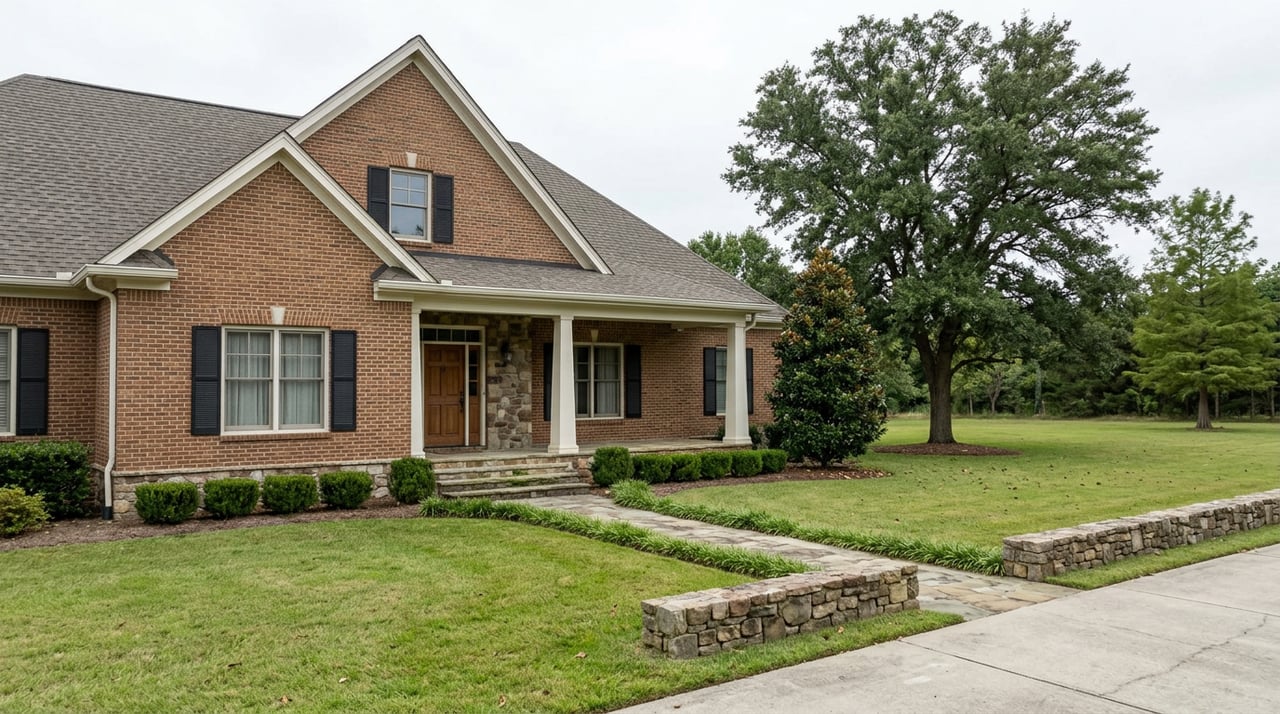
Say you are under contract on five acres on the rural side of Eads, east of the I-269 corridor. Your private septic inspector already came out, popped the lid, ran the dye test, and signed off. You assume the septic question is closed. It isn't. Buried in the standard Tennessee purchase agreement is a line most buyers skim past: a notice that a second, entirely separate septic evaluation exists, one that has nothing to do with what your inspector just did.
Tennessee Real Estate Commission Rule 1260-2-.37 requires the licensee writing your offer to tell you that a state-run septic system Inspection Letter is available through the Tennessee Department of Environment and Conservation's Division of Water Resources, for a fee. Almost nobody orders it. Almost everybody assumes the private inspection already covers whatever that state letter is for. It doesn't, and the gap between the two matters more in Eads than in almost any other suburb this team serves.
Two Inspections, One Line Item
A private septic inspection is the one your home inspector or a septic contractor performs during your due diligence window. They locate the tank, dig to the lid, pump it if needed, check the baffles, and walk the drain field looking for wet spots or odor. It's thorough, it's fast, and it usually fits inside a standard 10 to 14 day inspection period.
The TDEC Inspection Letter is a different animal. According to TDEC's own description, it documents the status of an existing septic system and is routinely requested by the property owner, a realtor, a lending institution, or a buyer specifically when a property is being sold, financed, or reviewed for a subdivision plat. It's a ground-level visit by a state environmental scientist, not a tank-opening service.
| Private septic inspection | TDEC Inspection Letter | |
|---|---|---|
| Who performs it | Licensed septic contractor or home inspector | TDEC Division of Water Resources staff |
| What it checks | Tank condition, baffles, pumping, drain field | Ground-level signs of failure, standing water, obstructions |
| Opens the tank | Yes | No |
| Typical fit | Inside a standard due diligence period | Requires advance scheduling, separate from your inspection contingency |
| Cost | Varies by contractor | $200, per TDEC's own fee schedule |
Neither one substitutes for the other. The private inspection tells you whether the system works today. The state letter is the document a lender, a title company, or a future buyer may specifically ask for later, and it's the one the law says your agent has to mention exists, whether or not anyone requests it.
Why This Lands Differently in Eads
Inside Germantown or Collierville, most lots tie into municipal sewer, so this whole conversation rarely comes up. Eads is different. Most of the area sits in unincorporated Shelby County, and Shelby County's own development code sets minimum lot sizes around exactly this issue: a parcel without public sewer generally needs at least two acres after road dedication, and a parcel needing both a private septic system and a private well generally needs at least four. That code is the reason Eads reads as acreage country rather than subdivision country. It also means the overwhelming majority of homes here run on septic and well by design, not by exception.
Some of that reliance deepened after certain Eads-area parcels lost access to city sewer connections following a 2020 de-annexation referenced in Shelby County planning materials. A property that once had a sewer tap available may not anymore, which is one more reason the septic question on an Eads listing deserves more attention than the same question on a Bartlett or Cordova listing.
Layer onto that the age and style of the housing stock. Established Eads homes tend to date from the late 1990s through the mid-2010s, sitting on one to three acres with large garages, workshops, and, frequently, pools. There's typically no HOA out here, which means no architectural review board flagging a new pool or outbuilding before it goes in near a septic line. A system permitted decades ago for the original house may now be sharing the yard with additions nobody cross-checked against it.
The Setback Math an Appraiser Runs Anyway
If you're financing with FHA or VA, none of this is optional review, because a lender's appraiser has to verify specific distances before the loan can close. HUD's minimum property standards call for at least 50 feet between a septic tank and any well on the property. Separate HUD guidance on well placement sets the minimum separation between a domestic well and a septic drain field at 75 feet where state or local rules allow that distance, rising to 100 feet where no local standard exists, and requires the well itself to sit no closer than 10 feet to a property line.
An appraiser has to show these distances on a site sketch. If a pool, a workshop, or a converted bonus bedroom happens to sit inside one of those lines, that becomes a lender-required repair or further inspection, a separate problem from anything a home inspector would flag, and one that surfaces during underwriting rather than during your inspection period.
There's a second, less obvious trigger tied to growth along the I-269 corridor. FHA guidance generally treats connecting to an available public sewer line as required unless the hookup cost runs above roughly 3 percent of the home's appraised value. As commercial development continues to push east along that corridor, a septic property that once had no nearby sewer option at all could eventually have one, which shifts an assumed non-issue into a real line-item cost depending on how close a new line runs.
Order the State Letter Before the Private One Comes Back
TDEC's own septic system permit process for new installations can take up to 45 days from a complete application, which is a useful signal for how the department generally paces site work, even on requests that aren't new permits. On top of that, Shelby County is one of the counties that administers its own septic program rather than feeding records into TDEC's statewide search tool. TDEC's records portal says as much directly: Shelby, along with counties like Davidson, Hamilton, and Williamson, sits outside the main database, so anyone pulling a permit history on an Eads property has to go through Shelby County's own channel first.
A workable sequence looks like this:
- Confirm which side of the county line the parcel sits on before requesting anything, since Shelby and Fayette handle septic records differently
- Pull the septic permit file through the correct county channel rather than assuming TDEC's central search will have it
- Schedule your private septic inspection through your own contractor inside the standard due diligence window
- If you want the state Inspection Letter too, apply directly with TDEC's Division of Water Resources at contract execution, not after your private inspection results come back, and expect a multi-week process rather than a same-week turnaround
- If you're financing with FHA or VA, ask the appraiser to flag well, tank, and drain field distances early, before the final walk-through, especially on a property with a pool or outbuilding
Frequently Asked Questions
Is the TDEC Inspection Letter required to close on an Eads property? No. It's optional, requested by the buyer, seller, or lender when someone wants it. What's required is that your agent tell you it's available, per Tennessee Real Estate Commission Rule 1260-2-.37.
Who pays the $200 fee? Nothing in state rule assigns it. Like most due diligence costs, it's negotiable in the purchase agreement.
Does the state letter replace pumping the tank? No. It's a ground-level visual assessment for signs of failure or obstruction. It does not open the tank the way a private septic inspection does.
Does any of this change if my Eads parcel sits on the Fayette County side instead of Shelby? The disclosure rule itself is statewide and applies either way. The records search does not: Fayette County septic files run through TDEC's main statewide database, while Shelby County parcels require going through Shelby's own separate channel.
If you're weighing an acreage purchase in Eads, or you're the one selling a septic-and-well property and want the paperwork lined up before a buyer's lender starts asking questions, Chuck House and the House Team have spent years walking Memphis-area clients through exactly this kind of transaction. Reach out for a conversation before you write the offer, not after.